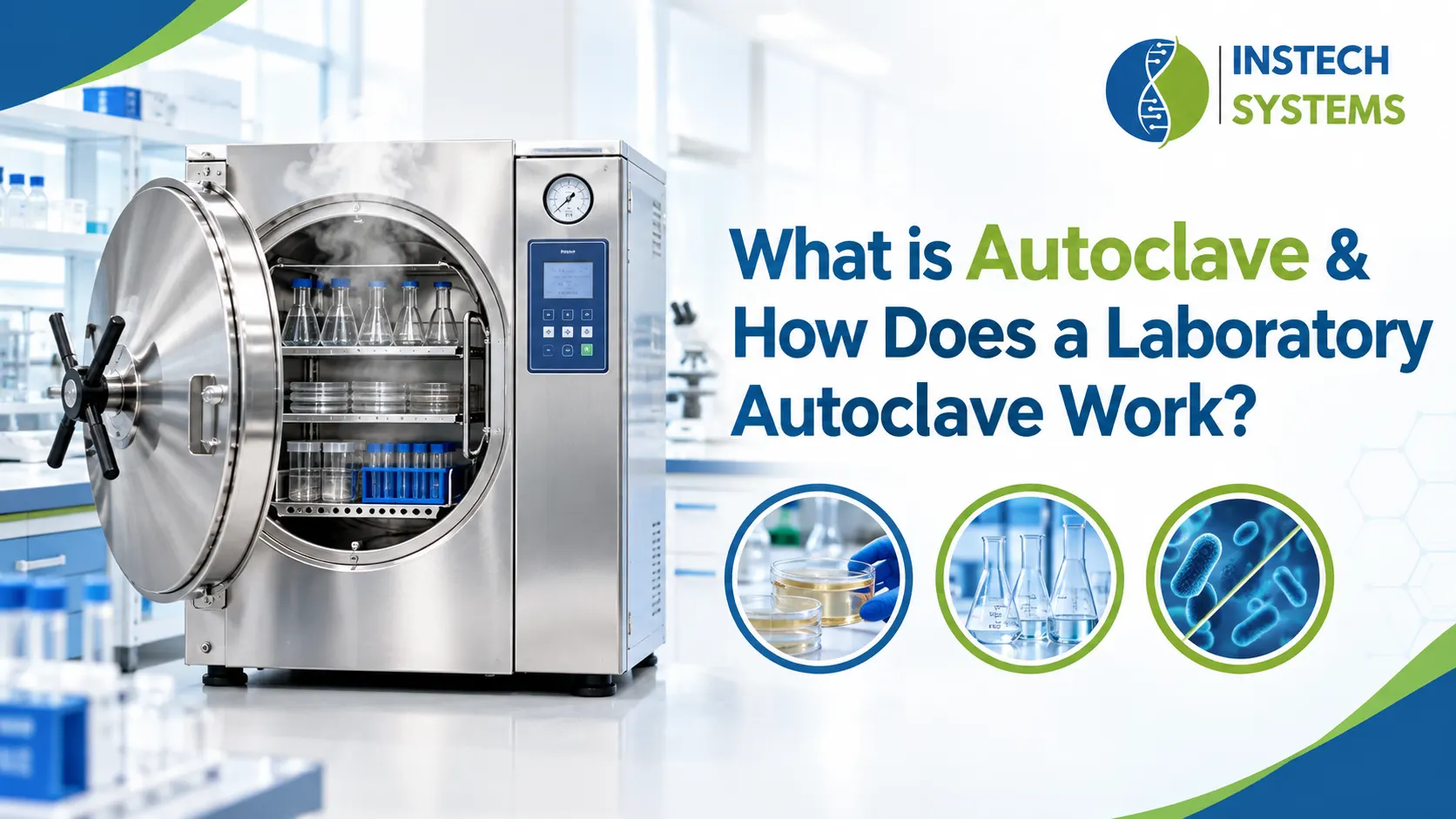
Autoclave a laboratory sterilization machine used to destroy microorganisms, including bacteria, viruses, fungi, and bacterial spores, from laboratory equipment, media, glassware, and other heat-resistant materials. It works by using high-pressure saturated steam at a controlled temperature for a specific holding time. Autoclaves are widely used in microbiology laboratories, pharmaceutical facilities, hospitals, research centres, biotechnology industries, and educational laboratories.
What Is an Autoclave?
An autoclave is a pressure-based steam sterilization machine. Unlike simple boiling, an autoclave increases the pressure inside a closed chamber, allowing steam to reach temperatures above the normal boiling point of water. The combination of steam, temperature, pressure, and exposure time provides effective sterilization of suitable materials.
The main purpose of an autoclave is not simply to heat laboratory items but to expose them to properly controlled moist steam for a defined cycle. The steam transfers heat efficiently to the load, helping destroy microorganisms and their resistant spores.
Autoclaves are available in different sizes and configurations for different Laboratory models selected according to chamber capacity, type of material being sterilized, available space, and required sterilization process cycles.
How Does an Autoclave Work?
The autoclave machine working principle is based on moist heat sterilization. Water is heated inside the system to produce steam. The steam is introduced into the sterilization chamber, where air is removed or displaced. As pressure and temperature increase, the steam transfers heat to the materials placed inside the chamber.
1. Loading the Chamber
The items to be sterilized are placed inside the autoclave chamber. Laboratory glassware, culture media, instruments, metal equipment, and other suitable heat-resistant materials may be processed depending on the machine and load requirements.
The load should be arranged properly so that steam can circulate around the materials. Overloading the chamber can restrict steam penetration and may affect sterilization performance.
2. Air Removal
Before effective steam sterilization can take place, air needs to be removed from the chamber or displaced by steam. Air trapped around or inside the load can prevent proper contact between the steam and the material.
Different laboratory autoclaves may use different air-removal arrangements depending on their design and operating cycle.
3. Steam Generation
Water is heated to generate steam. As steam enters the chamber, the internal pressure and temperature increase. Saturated steam is particularly effective because it transfers heat efficiently when it comes into contact with cooler surfaces.
4. Sterilization Holding Period
Once the required temperature and pressure are reached, the machine maintains the sterilization conditions for a predetermined period. Common laboratory steam sterilization conditions include approximately 121°C or 134°C, depending on the equipment, load, and validated cycle.
The holding time is important because sterilization depends on the combination of temperature, steam contact, and exposure time rather than pressure alone.
5. Exhaust and Pressure Release
After the sterilization stage is completed, the chamber pressure is reduced in a controlled manner. Depending on the type of load, the exhaust process may need to be gradual to prevent damage to containers or liquids.
6. Drying and Unloading
Some laboratory autoclaves include a drying stage after sterilization. Once the cycle is complete and the chamber has reached safe conditions, the door can be opened according to the manufacturer’s operating procedure and the sterilized materials can be removed.
Autoclave in Microbiology
An autoclave in microbiology very important piece of equipment used to maintain sterile laboratory conditions. Microbiology laboratories routinely handle microorganisms, culture media, contaminated laboratory materials, and reusable equipment. Proper steam sterilization helps control microbial contamination and supports safe laboratory practices.
Autoclaves can be used for suitable microbiological materials such as prepared culture media, laboratory glassware, certain instruments, and contaminated waste, provided the load is compatible with the machine and the appropriate cycle is used.
For example, culture media used for growing microorganisms must be sterilized before use to prevent unwanted contamination. After microbiological work, suitable contaminated materials may also require validated autoclave treatment before disposal.
Autoclave’s exact cycle should always be selected according to the material, load configuration, equipment instructions, and laboratory sterilization procedures.
Main Components of a Laboratory Autoclave
A laboratory autoclave generally consists of several important components that work together to control the sterilization process.
Sterilization Chamber: The chamber is the main enclosed area where laboratory materials are placed for sterilization. It is designed to withstand elevated temperature and pressure.
Steam Generation System: The system heats water to produce steam required for the sterilization cycle.
Pressure Control System: Pressure sensors, valves, and related components help monitor and control chamber pressure during operation.
Temperature Sensor: Temperature monitoring is essential for maintaining the selected sterilization conditions.
Control Panel: The control system allows operators to select and monitor sterilization parameters such as temperature, time, and cycle settings.
Safety System: Autoclaves incorporate safety features intended to prevent unsafe operation, including door-locking and pressure-related safety mechanisms.
Why Is Steam Used in an Autoclave?
Steam is used because it transfers heat efficiently to surfaces and materials. When saturated steam contacts a cooler object, it condenses and releases a significant amount of heat. This helps raise the temperature of the load and supports the destruction of microorganisms.
The combination of moist heat and controlled temperature makes steam sterilization highly effective for compatible laboratory materials. This is why autoclaves are commonly used where reliable sterilization is required.
Types of Materials That Can Be Autoclaved
Not every laboratory material is suitable for autoclaving. Materials that can withstand high temperatures and moisture may be suitable, depending on their design and the manufacturer’s instructions.
Common examples include:
- Heat-resistant laboratory glassware
- Certain stainless-steel instruments
- Suitable culture media
- Heat-resistant laboratory containers
- Certain microbiological waste
- Reusable laboratory equipment designed for steam sterilization
Materials that are sensitive to heat, moisture, pressure, or chemical changes should not be placed in an autoclave unless specifically approved for the process.
Advantages of Laboratory Autoclaves
Laboratory autoclaves provide several advantages for laboratories and industrial facilities:
Effective Steam Sterilization: Autoclaves use controlled steam conditions to sterilize suitable laboratory materials and equipment.
Consistent Operation: Automated temperature, pressure, and time controls can help provide repeatable sterilization cycles when the equipment is properly operated and maintained.
Suitable for Different Laboratory Applications: Depending on the configuration, autoclaves can be used for laboratory glassware, media, instruments, and other compatible materials.
Improved Laboratory Hygiene: Proper sterilization helps reduce microbial contamination and supports controlled laboratory working conditions.
Practical Operation: Modern laboratory autoclaves can include programmable controls, cycle monitoring, safety systems, and automatic functions for convenient operation.
How to Select a Laboratory Autoclave?
Selecting a Laboratory autoclave requires consideration of the type and quantity of materials that need sterilization. Chamber capacity is one of the first factors to evaluate. A laboratory with a higher sterilization workload may require a larger chamber, while smaller laboratories may benefit from a compact model.
Temperature range, pressure rating, cycle controls, loading arrangement, safety features, material compatibility, and installation requirements factors being considered. The autoclave should be selected according to the laboratory’s actual sterilization requirements.
Instech Pharma a leading HVAC Steam Sterilizer Manufacturers, provides laboratory autoclave solutions designed for different laboratory and pharmaceutical applications. Our focus is on practical machine design, controlled sterilization, reliable operation, and suitability for regular laboratory use.
Autoclave Safety and Good Operating Practices
Autoclaves operate at elevated temperatures and pressures, so trained personnel should operate them according to the manufacturer’s instructions and laboratory safety procedures. Loads should be prepared correctly, and the chamber should never be opened while unsafe pressure or temperature conditions remain.
Operators should also avoid overloading the chamber and should use suitable containers for liquids and other materials. Regular inspection, maintenance, cleaning, and validation should be carried out according to the equipment manufacturer’s recommendations and the laboratory’s quality procedures.
Conclusion
An autoclave is a steam sterilization machine that uses controlled temperature, pressure, and exposure time to sterilize compatible laboratory materials. Understanding how an autoclave works helps laboratories select the right equipment and operate it correctly. In microbiology, autoclaves play an important role in sterilizing culture media, laboratory equipment, and suitable contaminated materials.
Instech Pharma offers laboratory autoclave machines, Bioreactor, Planetary Mixer for pharmaceutical, microbiology, research, healthcare, and other laboratory applications. With appropriate capacity, controlled operating parameters, and suitable safety features, a laboratory autoclave can provide a dependable solution for routine steam sterilization requirements.