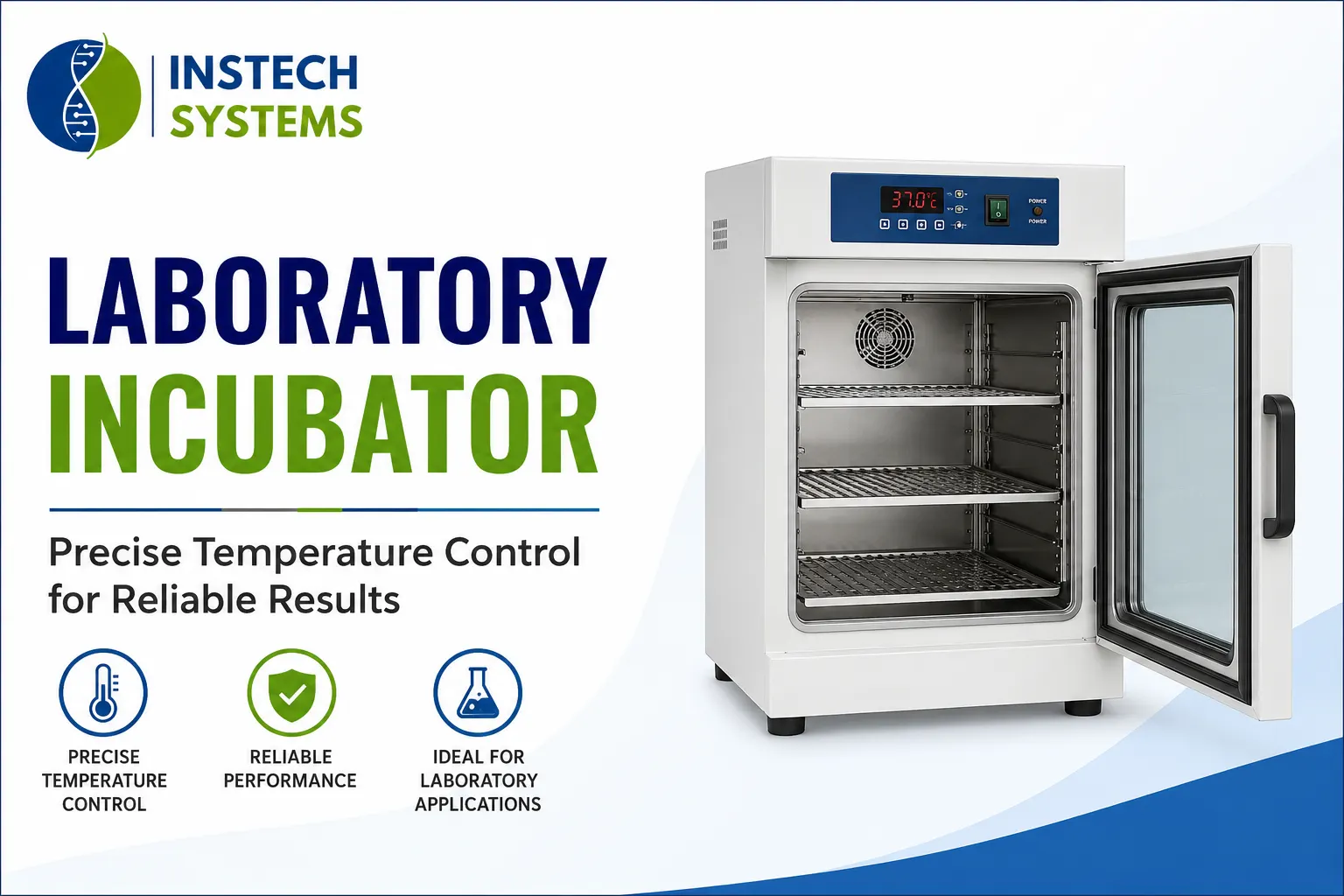
Laboratory incubator is an important piece of equipment used to provide controlled environmental conditions for the growth, storage, and testing of biological samples, microorganisms, cell cultures, and other laboratory materials. By maintaining a stable temperature and, in some models, controlling humidity, carbon dioxide, or oxygen levels, an incubator creates suitable conditions for different scientific and research applications.
Laboratory incubators are widely used in microbiology, biotechnology, pharmaceutical research, medical laboratories, food testing, and educational institutions.
What Is a Laboratory Incubator?
Laboratory incubator is a temperature-controlled chamber used to maintain samples at a specific temperature for a defined period. It provides a stable environment that supports the growth of microorganisms, cell cultures, and other biological samples.
Unlike a standard storage cabinet, a laboratory incubator is designed to maintain controlled conditions with the help of heating systems, sensors, insulation, and a temperature control unit.
Working Principle of Incubator
The working principle of a laboratory incubator is based on maintaining a controlled temperature inside an insulated chamber.
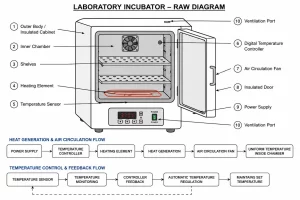
When the incubator is switched on, a heating element raises the internal temperature to the set value. A temperature sensor continuously monitors the chamber temperature. The controller compares the actual temperature with the set temperature and automatically regulates the heating system to maintain stable conditions.
In some advanced incubators, additional systems are provided for:
- Humidity control
- CO₂ regulation
- Air circulation
- Oxygen control
- Sterilization
Laboratory Incubator Diagram – Main Parts
- Outer Body / Insulated Cabinet – Provides insulation and protects the internal chamber.
- Inner Chamber – Space where laboratory samples and containers are placed.
- Shelves – Used to hold samples and laboratory containers.
- Heating Element – Generates heat to increase the chamber temperature.
- Temperature Sensor – Monitors the temperature inside the chamber.
- Digital Temperature Controller – Allows users to set and control the required temperature.
- Air Circulation Fan – Ensures uniform temperature distribution inside the chamber.
- Insulated Door – Helps maintain stable temperature and allows viewing of samples.
- Power Supply – Provides electrical power to the incubator system.
- Ventilation Port – Supports controlled air exchange when required.
Incubator uses in Laboratory
Laboratory incubators are used to provide a controlled environment for the growth, development, and testing of microorganisms, cells, and biological samples. By maintaining a stable temperature and other environmental conditions, it supports accurate and consistent laboratory experiments.
Common uses of incubators in laboratories include:
- Microbial Culture: Used for growing bacteria, fungi, and other microorganisms under controlled temperature conditions.
- Cell and Tissue Culture: CO₂ incubators are used to maintain suitable conditions for cell and tissue growth.
- Medical and Clinical Testing: Used for cultivating microorganisms from clinical samples for identification and analysis.
- Pharmaceutical Research: Supports drug testing, microbiological studies, and quality control processes.
- Food and Beverage Testing: Used to test food samples for microbial contamination and quality.
- BOD Testing: BOD incubators maintain controlled low temperatures for biochemical oxygen demand testing in water and wastewater analysis.
- Biotechnology Research: Used in various biological experiments and research applications.
- Environmental Testing: Helps in the analysis and growth studies of microorganisms present in soil, water, and other environmental samples.
Types of Laboratory Incubators
Different types of laboratory incubators are available according to the application and environmental control requirements.
1. Standard Laboratory Incubator
A standard incubator is mainly used for temperature-controlled incubation of samples and microorganisms. It is commonly used in educational, medical, and research laboratories.
2. BOD Incubator
A BOD incubator is designed to maintain lower and controlled temperatures for Biochemical Oxygen Demand testing. It is widely used in environmental and water testing laboratories.
3. CO₂ Incubator
A CO₂ incubator controls temperature, humidity, and carbon dioxide concentration. It is commonly used for cell culture, tissue culture, and biotechnology applications.
4. Shaking Incubator
A shaking incubator combines controlled temperature with continuous shaking. It is used for microbial culture, cell growth, and biological research where agitation is required.
5. Refrigerated Incubator
A refrigerated incubator can maintain temperatures below ambient conditions. It is useful for applications that require controlled low-temperature incubation.
6. Anaerobic Incubator
An anaerobic incubator provides an oxygen-free or low-oxygen environment for the growth of anaerobic microorganisms.
Importance of Laboratory Incubators
Laboratory incubators provide a controlled and stable environment that helps improve the reliability of laboratory experiments. Maintaining consistent temperature and environmental conditions is essential for obtaining accurate and repeatable results.
The use of a suitable incubator helps researchers and laboratory professionals:
- Maintain stable incubation conditions
- Support microbial and cell growth
- Improve testing consistency
- Reduce environmental variations
- Protect samples from unsuitable external conditions
Conclusion
A laboratory incubator is an essential laboratory instrument used to maintain controlled environmental conditions for the growth, testing, and storage of biological samples and microorganisms. Its working principle is based on maintaining a stable temperature using heating elements, sensors, and an automatic control system.
From standard laboratory incubators and BOD incubators to CO₂ and shaking incubators, different types are available for specific applications. Instech Pharma, Bioreactor Manufacturers reliable laboratory equipment solutions for various scientific, pharmaceutical, medical, and research requirements.