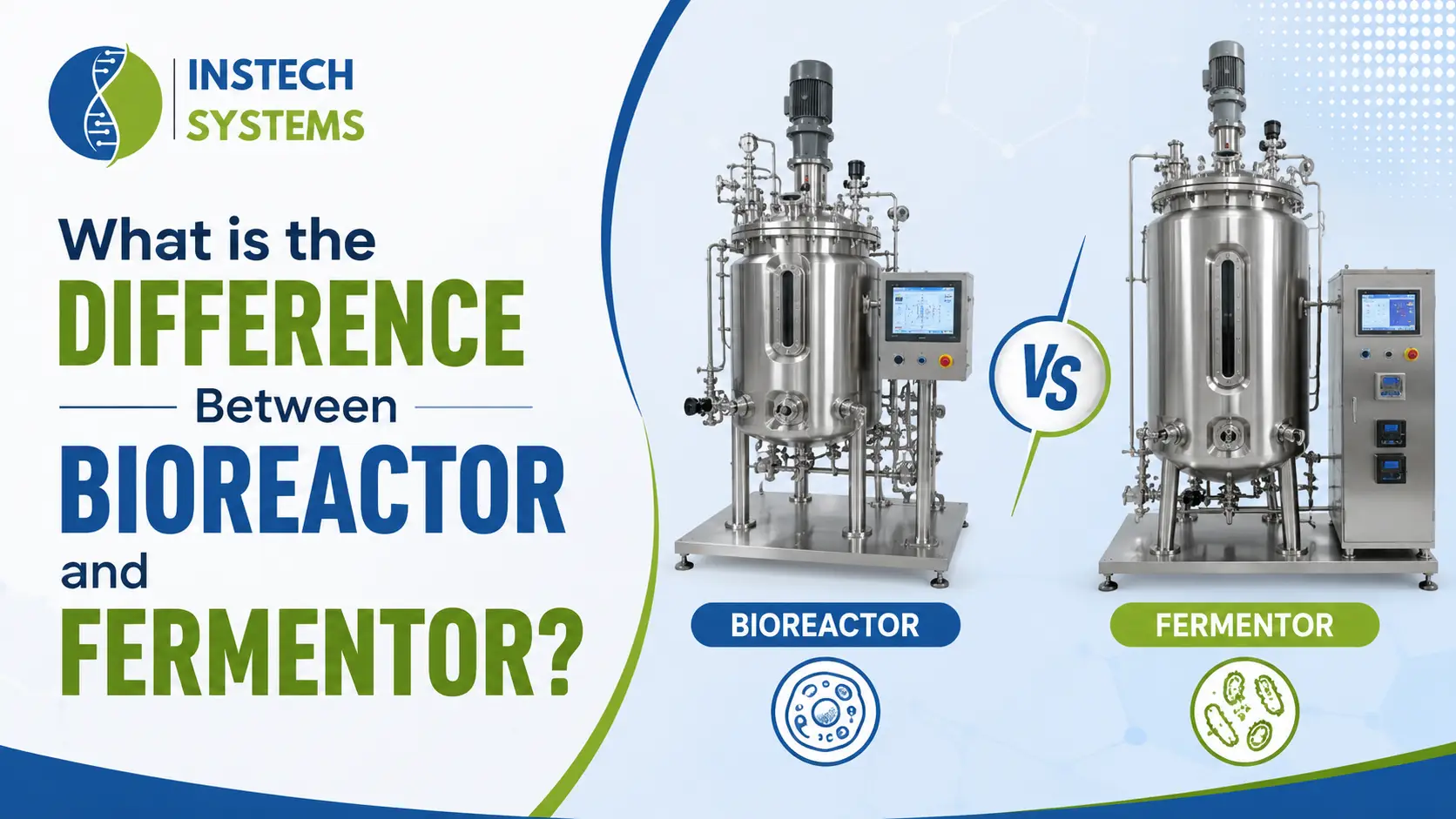
Bioreactors and fermentors are important equipment used in biotechnology, pharmaceutical, food processing, and industrial production. Although these terms are often used interchangeably, there are some differences between them based on their applications and the type of biological process they support.
Fermenters and bioreactors are often treated as the same equipment, but their practical applications can differ. Fermenters are generally associated with the cultivation of microorganisms such as bacteria, yeast, and fungi, while bioreactors cover a broader range of controlled biological processes.
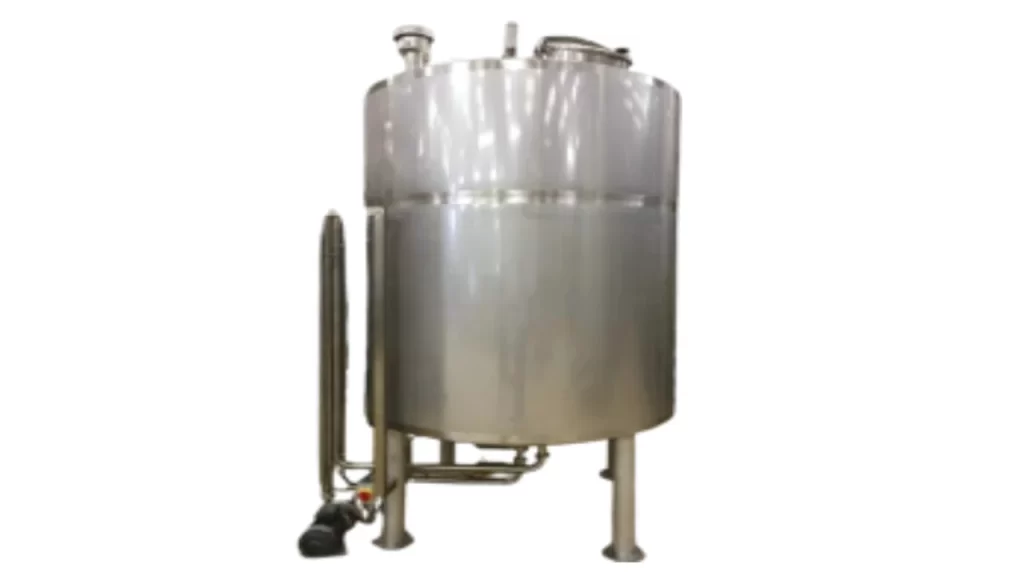
What is Fermenter?
A fermenter is primarily used for the cultivation of microorganisms such as bacteria, yeast, and fungi. It supports fermentation processes in which microorganisms produce valuable products such as antibiotics, enzymes, organic acids, alcohol, and other bioproducts.
Fermentors are designed to provide suitable conditions for microbial growth by controlling factors such as temperature, pH, oxygen supply, agitation, and nutrient availability.
They provide an optimal environment for microbial growth by maintaining temperature, pH, oxygen levels, and nutrient supply. Common applications of fermenters include the production of antibiotics, alcoholic beverages, probiotics, enzymes, and organic acids. Depending on the process, fermenters can be aerobic or anaerobic, enabling industries to maximize yield and efficiency in biological manufacturing.
Features of Fermenter
Fermenters are used especially in the production of fermented foods and beverages such as beer, wine, yoghurt and fermented soy products. In the pharmaceutical industry, they are used to produce antibiotics and other biotechnological products by microbial fermentation.
- Specific application: Designed primarily for fermentation processes.
- Control of conditions: Allows precise control of factors such as temperature, pH and oxygen, essential for fermentation.
- Materials of construction: Generally made of stainless steel to prevent contamination and facilitate cleaning.
- Process types: Handles both aerobic (with oxygen) and anaerobic (without oxygen) processes.
What is Bioreactor?
A bioreactor is a vessel or controlled system designed to support biological reactions under carefully maintained conditions. It can be used for the cultivation of microorganisms, animal cells, plant cells, and other biological materials.
Bioreactor allows precise control of important parameters such as temperature, pH, dissolved oxygen, agitation, aeration, and pressure. These systems are widely used in pharmaceutical production, biotechnology, cell culture, tissue engineering, and research applications.
Bioreactors are widely used in pharmaceuticals, biotechnology, biofuel production, and wastewater treatment. They play a crucial role in vaccine manufacturing, monoclonal antibody production, enzyme synthesis, and tissue engineering. Unlike fermenters, which focus on microbial fermentation, bioreactors can support a broader range of biological processes, including cell culture and biopharmaceutical production, making them essential in modern industrial biotechnology.
Features of Bioreactor
Bioreactors have different applications in the pharmaceutical ⇀ industry for the production of drugs, such as monoclonal antibodies and vaccines. They are also used in the production of biofuels, bioplastics, and in stem cell and gene therapy research.
- Versatility: Used for a wide range of processes, not just fermentation.
- Scalability: It is very varied, ranging from small volumes in laboratories to large volumes for industrial production.
- Advanced control: Includes precise monitoring and control systems to optimise culture conditions, such as dissolved oxygen, CO2, pH and temperature sensors.
- Diverse applications: Used in the pharmaceutical industry, biofuel production, stem cell research, and more.
Differences Between Fermenter and Bioreactor
| Basis | Bioreactor | Fermentor |
|---|---|---|
| Meaning | A broad term for equipment used for controlled biological processes | Equipment mainly used for fermentation processes |
| Biological Material | Microorganisms, animal cells, plant cells, and tissues | Mainly bacteria, yeast, and fungi |
| Application | Cell culture, biotechnology, pharmaceutical production, tissue engineering, and research | Antibiotics, enzymes, alcohol, organic acids, and microbial products |
| Process | Supports different types of biological reactions | Mainly supports microbial fermentation |
| Scope | Broader application | More specific application |
Bioreactor vs Fermentor: Choose the Right System:
Selecting the correct system—bioreactor or fermenter—is essential for optimizing production efficiency, maintaining product quality, and achieving industrial success. Both are critical in biotechnology and pharmaceutical applications, but their functions differ significantly.
1. Precision in Process Control
Bioreactors offer advanced control over temperature, pH, oxygen supply, and nutrient availability, making them suitable for delicate processes like tissue engineering, vaccine production, and enzyme synthesis. Fermentors, specifically designed for microbial fermentation, ensure controlled aerobic or anaerobic conditions for producing antibiotics, alcohol, and organic acids. Choosing the right system enhances yield, consistency, and product quality.
2. Cost-Effectiveness and Efficiency
Investing in the proper system reduces operational costs. Fermentors are ideal for companies focusing on fermentation-based products, offering a streamlined, cost-effective approach. Bioreactors, while more versatile, require additional control mechanisms, making them suitable for complex biological reactions. Choosing the correct equipment minimizes waste and optimizes resource utilization.
3. Industry-Specific Applications
- Bioreactors are widely used in pharmaceuticals, biofuels, tissue engineering, and wastewater treatment.
- Fermenters play a crucial role in food industries, probiotic production, and biogas generation.
A well-informed decision ensures alignment with industry needs, leading to greater productivity and sustainability.
4. Scalability for Future Growth
Whether for small-scale research or large-scale production, bioreactors and fermentors offer various scalability options. Understanding their differences enables businesses to expand operations efficiently and meet increasing demands without compromising quality.
Benefits of Understanding the Difference Between Bioreactor and Fermentor
In the field of biotechnology, pharmaceuticals, and industrial microbiology, bioreactors and fermentors play a crucial role in the controlled cultivation of microorganisms, cells, and biological substances. While both systems serve as vessels for biological processes, they have distinct applications. Understanding their differences and benefits can optimize production, enhance efficiency, and reduce costs for industries relying on bioprocessing.
1. Enhanced Process Control and Optimization
One of the biggest advantages of understanding the difference between a bioreactor and a fermentor is the ability to control and optimize production processes effectively.
- Bioreactors provide highly controlled environments for a variety of biological applications, including cell culture, enzyme production, and biofuel synthesis.
- Fermentors are specifically designed to facilitate microbial fermentation, making them ideal for antibiotic production, alcohol fermentation, and probiotic manufacturing.
By selecting the appropriate system, industries can ensure that oxygen levels, pH, temperature, and nutrient supply are optimized for their specific biological process, resulting in higher yields and better product quality.
2. Increased Efficiency and Cost Savings
Using the right system can significantly improve efficiency and reduce operational costs.
- Fermentors are optimized for microbial growth, meaning they require fewer modifications and specialized components, reducing initial investment and operating expenses for fermentation-based industries.
- Bioreactors, while more complex, allow for a broader range of applications, enabling multiple production processes within a single system. This flexibility can help industries cut costs by consolidating different biological processes into a single setup.
By choosing the correct equipment, industries can maximize production efficiency while minimizing resource waste, making their operations more cost-effective.
3. Improved Product Quality and Consistency
Whether producing pharmaceuticals, enzymes, or biofuels, maintaining high-quality and consistent product output is essential.
- Bioreactors provide precise control over environmental conditions, ensuring optimal cell growth and biological activity. This is crucial for vaccine production, monoclonal antibodies, and regenerative medicine, where consistency is key.
- Fermentors create controlled anaerobic or aerobic conditions for microbial fermentation, ensuring uniform antibiotic, enzyme, and alcohol production.
By using the right system, manufacturers can meet strict industry regulations, reduce batch variability, and enhance product reliability.
4. Broader Range of Applications
Understanding the differences between bioreactors and fermentors helps businesses choose the right technology for their specific needs.
- Bioreactors are versatile and used in pharmaceuticals, biopharmaceuticals, biofuels, wastewater treatment, and tissue engineering.
- Fermentors are commonly used in food, beverage, pharmaceutical, and biogas industries for large-scale fermentation processes.
This knowledge allows companies to expand their capabilities, explore new product lines, and increase market competitiveness.
5. Scalability and Future Growth
Choosing the appropriate system helps businesses scale their operations effectively.
- Fermenters are widely available in different sizes, from laboratory-scale to industrial-scale production, allowing companies to gradually expand their production capacity.
- Bioreactors offer advanced features such as automated control systems and real-time monitoring, making them suitable for large-scale production where precision and reproducibility are critical.
By selecting the right system, businesses can plan for future growth, meet increasing production demands, and maintain consistent quality as they expand.
Is a Fermenter a Type of Bioreactor?
Yes, a fermentor can be considered a type of bioreactor. The term bioreactor covers a wider range of systems used for biological processes, while a fermentor is specifically designed for fermentation and microbial cultivation.
In simple terms, all fermentors can be considered bioreactors, but all bioreactors are not fermentors.
Similarities Between Bioreactor and Fermentor
Both bioreactors and fermentors are designed to provide a controlled environment for biological processes. They may include similar systems for:
- Temperature control
- pH monitoring
- Agitation
- Aeration
- Dissolved oxygen control
- Sterilization
- Process monitoring
- Automated control systems
The main difference is generally related to the type of biological process and organism being cultivated.
Conclusion:
Understanding the difference between bioreactors and fermentors is crucial for optimizing production in biotechnology, pharmaceuticals, and industrial microbiology. While both systems support microbial growth and biological processes, their applications vary significantly. Bioreactors offer a versatile platform for cell culture, enzyme production, vaccine development, and biofuel synthesis, whereas fermentors specialize in microbial fermentation for antibiotics, alcoholic beverages, probiotics, and organic acid production.
Choosing the right system enhances efficiency, product quality, and cost-effectiveness, ensuring businesses achieve their desired outcomes. Whether for large-scale pharmaceutical manufacturing or sustainable biofuel production, selecting the appropriate technology is key to success.