
Introduction
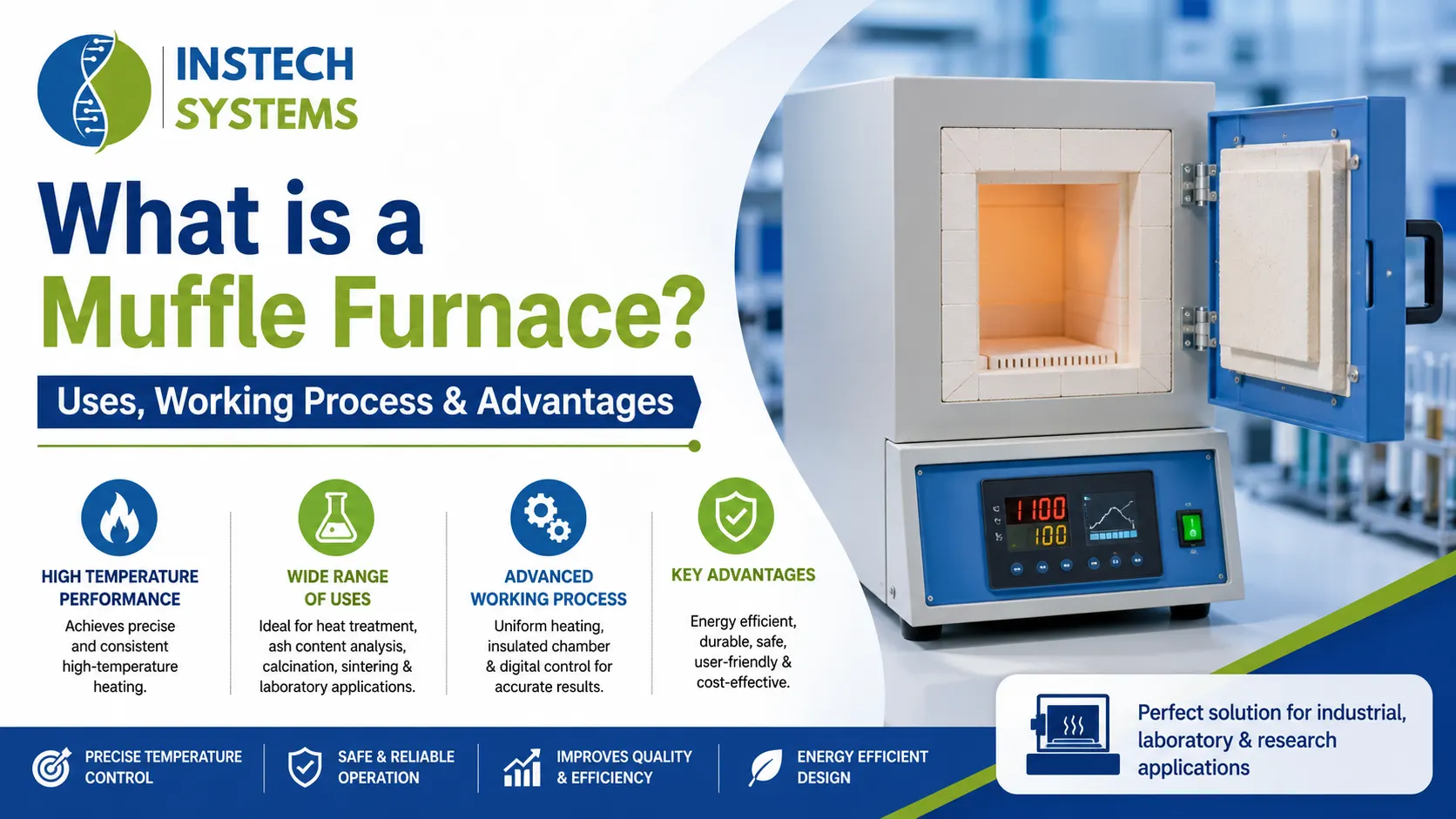
A Muffle Furnace is a high-temperature laboratory and industrial heating device used for heat treatment, material testing, ash determination, calcination, and various thermal processing applications. Unlike conventional furnaces, a muffle furnace isolates the material being heated from direct contact with combustion gases and flames. This ensures a clean and controlled heating environment, making it ideal for laboratories, research institutions, manufacturing plants, and quality control facilities.
Due to its ability to achieve precise temperature control and uniform heat distribution, the muffle furnace has become an essential piece of equipment across numerous industries.
What is a Muffle Furnace?
A muffle furnace is an electrically heated furnace designed to reach high temperatures while keeping samples separated from the heating elements and combustion products. The term “muffle” refers to the insulated chamber that protects the material from contamination during heating.
Modern muffle furnaces are equipped with advanced temperature controllers, programmable heating cycles, and digital monitoring systems, allowing users to perform highly accurate thermal processes.
Depending on the model and application, muffle furnaces can operate at temperatures ranging from 900°C to 1800°C or higher.
Working Principle of a Muffle Furnace
The working principle of a muffle furnace is based on indirect heating. Electrical heating elements surrounding the insulated chamber generate heat, which is evenly distributed throughout the furnace.
Working Process
- The material or sample is placed inside the furnace chamber.
- The desired temperature is set using the digital controller.
- Electrical heating elements generate heat.
- The insulated chamber retains heat and ensures temperature uniformity.
- The sample is heated according to the programmed cycle.
- After completion, the furnace cools down and the material is removed for further analysis or processing.
Since the material remains isolated from combustion gases, contamination is minimized and test results remain accurate.
Main Components of a Muffle Furnace
Furnace Chamber
The insulated space where samples are placed for heating.
Heating Elements
Generate heat using electrical resistance.
Temperature Controller
Allows precise temperature setting and monitoring.
Insulation System
Reduces heat loss and improves energy efficiency.
Thermocouple
Measures and controls chamber temperature accurately.
Digital Display
Shows real-time temperature and operating status.
Uses of a Muffle Furnace
1. Heat Treatment of Metals
Muffle furnaces are extensively used for:
- Annealing
- Hardening
- Tempering
- Stress relieving
These processes improve the mechanical properties of metals and alloys.
2. Ash Content Analysis
Laboratories use muffle furnaces to determine ash content in:
- Coal
- Food products
- Rubber
- Petroleum products
- Agricultural materials
This helps evaluate material composition and quality.
3. Calcination
Calcination involves heating materials to high temperatures to remove moisture and volatile substances
Common industries include:
- Cement manufacturing
- Chemical processing
- Mineral processing
4. Ceramic Processing
Muffle furnaces are widely used in ceramic industries for:
- Firing ceramic products
- Glazing operations
- Material testing
5. Glass Industry Applications
Glass manufacturers use muffle furnaces for thermal testing and specialized heat treatment operations.
6. Powder Metallurgy
Sintering processes require controlled heating environments, making muffle furnaces highly suitable for powder metallurgy applications.
7. Research and Development
Research laboratories use muffle furnaces for:
- Material analysis
- Thermal testing
- Experimental studies
- Product development
8. Pharmaceutical Industry
Pharmaceutical laboratories utilize muffle furnaces for:
- Sample preparation
- Quality control
- Material testing
Industries That Use Muffle Furnaces
Muffle furnaces are commonly used in:
- Metallurgical industries
- Research laboratories
- Educational institutions
- Pharmaceutical companies
- Ceramic manufacturing units
- Chemical industries
- Glass manufacturing plants
- Quality control laboratories
- Aerospace industries
Their versatility makes them valuable across a broad range of sectors.
Advantages of a Muffle Furnace
- Precise Temperature Control: Advanced controllers allow accurate temperature settings for consistent results.
- Uniform Heating: The chamber provides even heat distribution throughout the sample area.
- Contamination-Free Processing: Samples remain isolated from combustion gases and direct flames.
- Energy Efficiency: High-quality insulation minimizes heat loss and reduces power consumption.
- Repeatable Results: Consistent heating cycles improve testing accuracy and production quality.
- Versatility: Suitable for numerous laboratory and industrial applications.
- Easy Operation: Modern digital control systems simplify furnace operation.
- Long Service Life: Durable construction ensures reliable performance over many years.
Factors to Consider When Choosing a Muffle Furnace
When selecting a muffle furnace, consider:
Maximum Temperature: Choose a furnace that meets your application’s temperature requirements.
Chamber Size: Select a chamber capacity appropriate for your sample volume.
Temperature Accuracy: Precision is important for laboratory and research applications.
Heating Rate: Fast heating can improve productivity and reduce processing time.
Control System: Digital programmable controllers offer greater flexibility and automation.
Energy Efficiency: Efficient insulation lowers operating costs.
Safety Features: Look for over-temperature protection and safety shutdown systems.
Maintenance Tips
Proper maintenance improves furnace performance and lifespan.
- Clean the chamber regularly.
- Avoid overloading the furnace.
- Inspect heating elements periodically.
- Check thermocouple accuracy.
- Follow manufacturer operating guidelines.
- Schedule routine preventive maintenance.
- Regular care helps maintain accuracy and reliability.
Future of Muffle Furnace Technology
Modern muffle furnaces are becoming increasingly sophisticated with features such as:
- Programmable heating profiles
- Digital data logging
- Remote monitoring
- Automated process control
- Improved insulation materials
- Enhanced energy efficiency
These advancements help laboratories and industries achieve greater productivity and process accuracy.
Conclusion
A muffle furnace is a critical piece of equipment for laboratories and industries requiring controlled high-temperature processing. Its ability to provide contamination-free heating, precise temperature control, and uniform heat distribution makes it ideal for heat treatment, ash analysis, calcination, ceramic processing, and research applications.
Whether used in metallurgy, pharmaceuticals, ceramics, or quality control laboratories, a muffle furnace delivers reliable and repeatable thermal processing results.