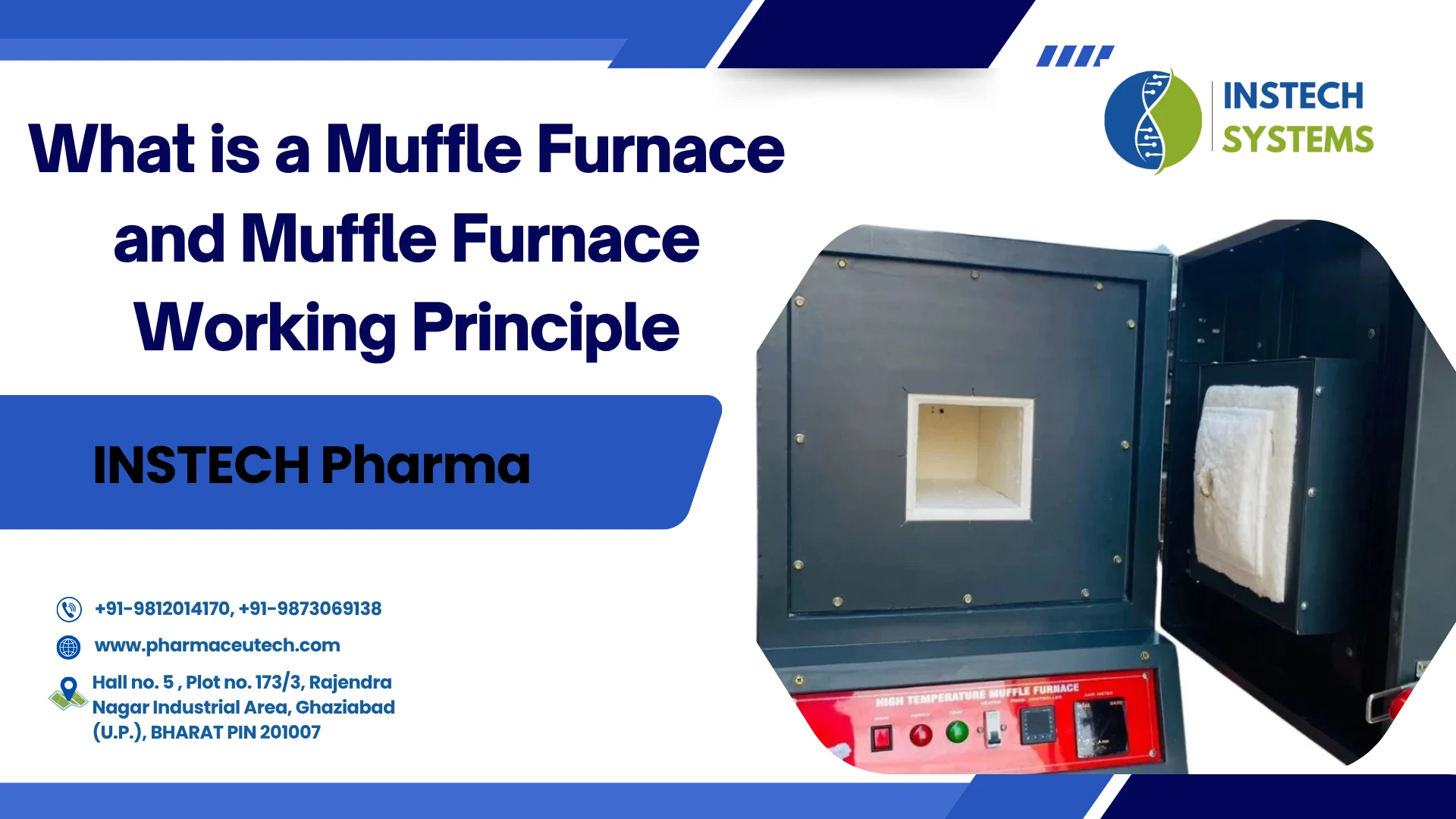
What is a Muffle Furnace and How Does It Work?
Have you ever wondered how scientists heat materials to very high temperatures without contaminating them? The answer is a muffle furnace. This special heating equipment is used in labs and industries around the world.
What is a Muffle Furnace
A muffle furnace is a type of oven that can reach extremely high temperatures. It is called “muffle” because the heating chamber is isolated from the heating elements and flames. This isolation prevents any contamination of the material being heated.
Think of it like baking a cake in an oven. But instead of baking at 180 degrees, a muffle furnace can heat materials up to 1800 degrees Celsius or even higher. The main difference is that the material stays completely pure during heating.
These furnaces are widely used in laboratories, research centers, and manufacturing units. They help in testing materials, creating new substances, and processing various products.
Main Parts of a Muffle Furnace
To understand how a muffle furnace works, you need to know its basic parts:
The Outer Body: This is the external shell made of thick metal. It protects the internal parts and keeps the heat inside.
Insulation Layer: Between the outer body and heating chamber, there is thick insulation material. This layer prevents heat from escaping and keeps the outer body cool enough to touch.
Heating Chamber: This is the inside space where you place your samples. It is made of ceramic materials that can handle extreme heat without breaking down.
Heating Elements: These are special wires or coils that produce heat when electricity passes through them. They are located around the heating chamber.
Temperature Controller: This is like a thermostat in your home. It helps you set and maintain the exact temperature you need.
Door: The furnace has a strong door with good insulation to keep heat inside while protecting users from burns.
How Does a Muffle Furnace Work?
The working principle of a muffle furnace is actually quite simple when broken down into steps.
Step 1: Power Supply
When you turn on the muffle furnace, electricity flows to the heating elements. These elements are usually made of materials like nichrome wire or silicon carbide. These materials are chosen because they can get very hot without melting or breaking.
Step 2: Heat Generation
As electricity passes through the heating elements, they start producing heat. This is similar to how an electric heater or toaster works. The elements glow red or even white when they reach high temperatures.
Step 3: Heat Distribution
The heat from the elements spreads throughout the heating chamber. The ceramic walls of the chamber absorb this heat and radiate it evenly. This ensures that your sample gets heated uniformly from all sides.
Step 4: Temperature Control
Modern muffle furnaces have digital controllers that monitor the temperature constantly. If the temperature goes too high, the controller reduces power to the heating elements. If it drops too low, more power is supplied. This maintains a steady temperature.
Step 5: Insulation at Work
While all this heating is happening inside, the insulation layer does its job. It prevents heat from escaping through the walls. This makes the furnace more energy efficient and keeps the outside cool.
Step 6: Sample Processing
Your sample sits inside the heating chamber and absorbs heat. Depending on what you are doing, this could cause the sample to burn, melt, change chemically, or simply get tested for how it behaves at high temperatures.
Why is Isolation Important?
The key feature of a muffle furnace is that the heating elements never touch the sample. They are separated by the ceramic chamber walls. This isolation is crucial for several reasons:
Prevents Contamination: When materials burn or react at high temperatures, they can release gases or particles. If these came in contact with the heating elements, they could damage them or contaminate future samples.
Pure Results: In research and testing, you need accurate results. Any contamination can give false readings. The muffle design ensures your results are reliable.
Safety: Isolation also means that harmful fumes from the sample do not directly contact the electrical parts, reducing fire risk.
Longer Life: Since the heating elements are protected from direct contact with samples, they last much longer.
Different Types of Muffle Furnaces
Muffle furnaces come in various types based on their design and purpose:
Box Furnace: This is the most common type. It looks like a rectangular box and is used for general heating purposes.
Tube Furnace: This has a cylindrical heating chamber. It is ideal for heating long samples or when you need to control the atmosphere inside.
Bottom Loading Furnace: The door opens from the bottom. This design is useful for specific industrial applications.
Top Loading Furnace: The door is on top. Samples are lowered into the chamber from above.
At Instech Pharma, we understand that different applications need different solutions. The right type depends on what you want to heat and how often you use it.
Comparison Table of Muffle Furnace Types
| Type | Capacity | Temperature Range | Application |
| Laboratory Muffle Furnace | Small | 1000 to 1200 C | Research and small sample heating |
| Industrial Muffle Furnace | Large | 1200 to 1600 C | Mass production heating and ashing |
| High Temperature Muffle Furnace | Medium to Large | 1600 to 1800 C | High temperature sintering and melting |
| Programmable Muffle Furnace | Small to Medium | 1000 to 1600 C | Precise heating with controlled temperature and time |
Common Applications
Muffle furnaces are used in many fields:
Testing Materials: Engineers test how materials behave at high temperatures. This helps in choosing the right materials for products like engine parts or building materials.
Creating New Materials: Scientists use these furnaces to create ceramics, glass, and other heat-treated materials.
Ashing Samples: In chemistry, burning away organic material to leave only ash is called ashing. This helps determine the mineral content of samples.
Heat Treatment: Metal parts are often heated and cooled in specific ways to make them stronger or change their properties.
Quality Control: Industries use muffle furnaces to test if their products can withstand high temperatures.
Research: Universities and research centers use them for countless experiments.
Temperature Ranges
Different models of muffle furnaces can reach different maximum temperatures:
- Basic models: Up to 1100°C
- Standard models: 1200°C to 1400°C
- High-temperature models: 1500°C to 1800°C
- Special models: Above 1800°C
The temperature you need depends on your application. For example, ceramics might need 1400°C while some metal treatments need only 900°C.
Key Features to Look For
When choosing a muffle furnace, consider these features:
Accurate Temperature Control: Look for furnaces with precise digital controllers. Some can maintain temperature within just one or two degrees.
Uniform Heating: The furnace should heat evenly throughout the chamber.
Good Insulation: Better insulation means lower energy costs and safer operation.
Durable Construction: The furnace should be built to last with quality materials.
Safety Features: Over-temperature protection, door interlocks, and cooling fans are important safety features.
Easy to Use: Simple controls and clear displays make operation easier.
Comparison: Muffle Furnace vs Regular Furnace
| Feature | Muffle Furnace | Regular Furnace |
| Contamination | No contamination due to isolated chamber | Direct contact may cause contamination |
| Temperature Control | Very precise digital control | Less precise control |
| Sample Purity | Very high purity maintained | May have impurities from combustion |
| Applications | Laboratory testing and research | General heating and melting |
| Cost | Higher initial cost | Lower initial cost |
| Energy Efficiency | More efficient due to insulation | Less efficient |
Safety Considerations
Working with muffle furnaces requires following proper safety guidelines:
Never Touch Hot Surfaces: The chamber and door become extremely hot. Always use heat-resistant gloves and tools.
Allow Cooling Time: After use, let the furnace cool down completely before opening it.
Proper Ventilation: Install the furnace in a well-ventilated area. Some samples release fumes when heated.
Regular Maintenance: Check heating elements and insulation regularly. Replace worn parts promptly.
Training: Only trained personnel should operate muffle furnaces.
Emergency Procedures: Know how to shut down the furnace quickly in case of problems.
At Instech Pharma, we emphasize the importance of safety training for all users of our equipment.
Maintenance Tips
To keep your muffle furnace working well for years:
Clean Regularly: Remove any spilled material from the chamber after it cools down.
Check Door Seals: Make sure the door closes tightly to prevent heat loss.
Inspect Heating Elements: Look for any damage or wear in the heating elements.
Calibrate Temperature: Periodically check if the temperature reading is accurate.
Keep It Dry: Moisture can damage insulation and electrical parts.
Follow Manual: Always refer to the manufacturer’s maintenance schedule.
Energy Efficiency
Modern muffle furnaces are designed to save energy:
- Better insulation reduces heat loss
- Programmable controllers prevent unnecessary heating
- Quick heating elements reach temperature faster
- Auto-shutoff features prevent wasted energy
These features not only save electricity but also reduce operating costs over time.
The Future of Muffle Furnaces
Technology continues to improve muffle furnaces. Newer models feature:
- Touchscreen controls for easier operation
- Remote monitoring through apps
- Better insulation materials
- Faster heating times
- More precise temperature control
- Data logging for research documentation
Why Choose Quality Equipment?
Investing in a good muffle furnace pays off in many ways:
Reliable Results: Quality furnaces give consistent and accurate results every time.
Lower Operating Costs: Efficient designs use less electricity and require less maintenance.
Longer Lifespan: Well-built furnaces last for many years.
Better Safety: Quality construction means fewer accidents and problems.
Technical Support: Reputable manufacturers provide good after-sales service.
Instech Pharma is committed to providing high-quality muffle furnaces that meet international standards. Our equipment is designed for reliability and ease of use.
Conclusion
A muffle furnace is an essential tool in many laboratories and industries. Its ability to heat materials to extreme temperatures while maintaining purity makes it invaluable for testing, research, and manufacturing.
The working principle is straightforward: heating elements generate heat, which is distributed evenly in an isolated chamber. This isolation prevents contamination and ensures accurate results.
Whether you need a muffle furnace for materials testing, quality control, or research, understanding how it works helps you choose the right model and use it effectively.
At Instech Pharma, we help our customers select the perfect muffle furnace for their needs. Our team provides complete support from selection to installation and maintenance.
Remember that proper use and maintenance of your muffle furnace will ensure it serves you well for many years. Always follow safety guidelines and manufacturer recommendations for best results.